When you move to a new country, you quickly realise most language apps aren’t built for real life.
You’re standing in a pharmacy with a screaming newborn, trying to ask for nappy cream — but the app you’ve been using has spent the last three weeks teaching you how to say “the cat is on the table.”
That’s more or less how Melophrase started.
My name is Michael, and I recently moved to Portugal with my young family. I’m learning Portuguese while renovating a house, restoring an old Land Rover, running a YouTube channel, and trying to function on very little sleep. Most days, I don’t have hours to sit down with textbooks or grammar exercises — and I suspect a lot of people don’t either.
So I started building something different.
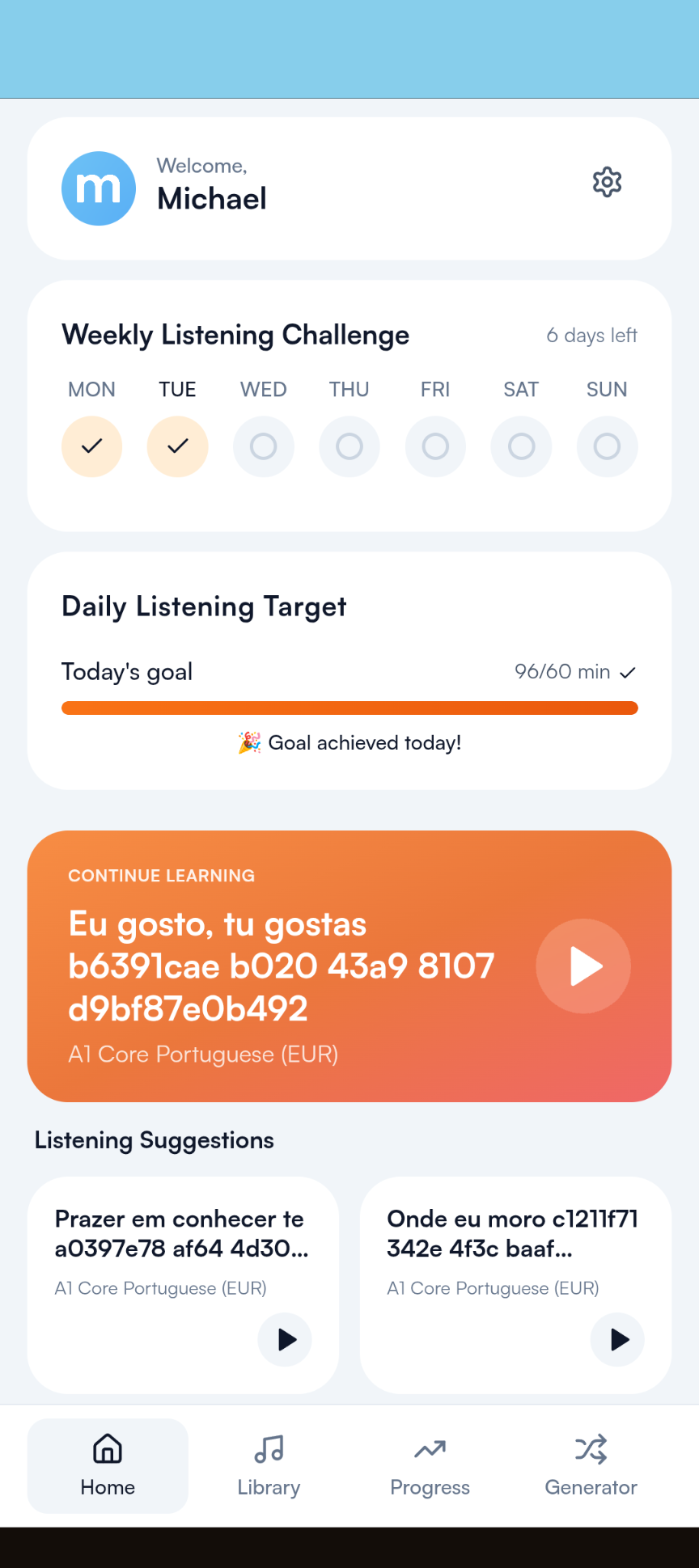
Melophrase is a music-based language learning app built around songs designed specifically for learners. Not translated chart music. Not random playlists. Every track is written around useful real-world situations and aligned to recognised language levels, so you learn vocabulary and sentence structures that actually match where you are in your journey.
Melophrase currently focuses on European Portuguese — the Portuguese spoken in Portugal. Other languages may follow.
At beginner levels, the songs focus on the phrases people genuinely need first:
introducing yourself, ordering food, asking for directions, going to the pharmacy, understanding basic conversation, or simply getting through daily life in another language.
The music itself is designed to help the language stick. Clear vocals. Controlled pacing. Repetition without feeling repetitive. Songs catchy enough to replay naturally, but structured carefully enough to support learning rather than distract from it.
That’s the part traditional language apps often miss.
Music is incredibly powerful for memory, pronunciation, and rhythm, but most existing songs aren’t built for learners. They move too fast. They use abstract language. They prioritise artistic expression over clarity. And while some apps use translated lyrics or existing music, the content still wasn’t originally designed around how people actually acquire a language.
Melophrase takes a different approach:
the music is the curriculum.
Each album is structured around graded vocabulary, practical scenarios, and simple sentence patterns designed to build confidence progressively — more like a soundtrack to living in another country than a collection of study exercises.
I built this because I genuinely needed it myself.
If you’ve found your way here, you probably do too.